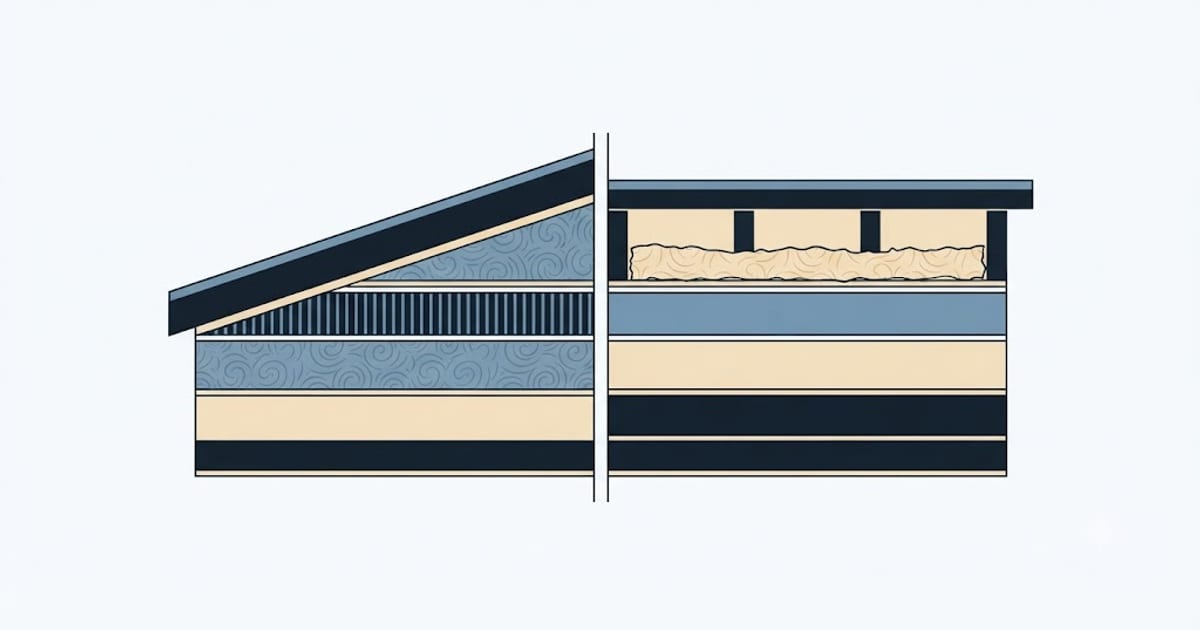
At equal R-value, spray foam costs three to five times what loose fill costs. That is not a small premium and it is not explained by R-value, because R-value is the one thing the cheap option delivers just as well.
What foam actually sells is air sealing and moisture control in a single application, and whether that is worth the money depends entirely on which part of the house you are insulating.
Price at equal R
Installed, typical US pricing at the time of writing, at roughly R-38 in an attic:
| Material | Per sq ft at R-38 | Per board foot |
|---|---|---|
| Loose-fill fiberglass | $1.40 – 2.80 | — |
| Loose-fill cellulose | $1.50 – 2.90 | — |
| Fiberglass batts | $1.30 – 2.40 | — |
| Open-cell spray foam | $4.50 – 7.50 | $0.45 – 0.75 |
| Closed-cell spray foam | $7.00 – 12.00 | $1.00 – 1.60 |
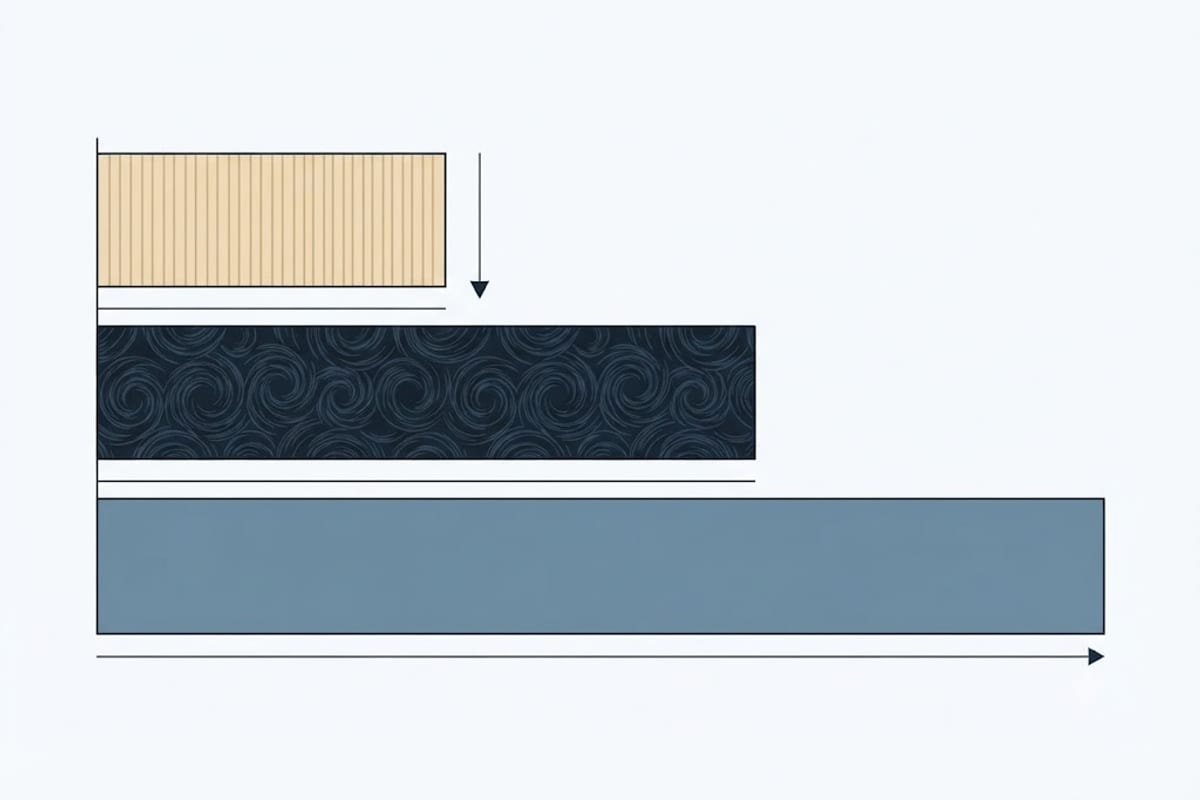
Closed-cell reaches R-38 in about 6 inches; open-cell needs about 10; loose-fill fiberglass about 15. On a 1,200 sq ft attic that is roughly $1,900 in loose fill against $8,400 in closed-cell — a $6,500 difference on one attic.
Foam is quoted per board foot (one square foot at one inch). If a quote gives only a lump sum, ask for the board-foot rate and the specified thickness; without both you cannot check whether the R-value you are paying for is the R-value being sprayed.
What the premium buys
Three things, and only the first two are usually worth paying for.
Air sealing built in. Foam is the air barrier and the insulation at once. Loose fill stops none of the air movement through a ceiling — you seal separately, then insulate. That separate sealing job is real work, and on a complicated ceiling plane with dropped soffits, a chimney chase and thirty penetrations it can be genuinely difficult. Foam sidesteps it.
But on a simple ceiling it is cheap to do properly. Air sealing plus loose fill typically runs $2,400 – 5,100 against $8,400 for closed-cell — see the attic air sealing checklist for what that work is.
Vapour control from the material itself. Closed-cell at 2 inches or more is a vapour retarder. In a crawlspace, a rim joist or an unvented cathedral assembly that is the point of using it — you are not buying R, you are buying a moisture strategy. Open-cell is vapour-open and does not do this.
Structural stiffness and no settling. Closed-cell adds racking strength and never settles. Real, and rarely what anyone is buying it for.
Where foam is the right answer
Rim joists. The classic case. A rim joist is a short run, awkward to seal any other way, and a serious heat loss and condensation point. Small area, big effect, and closed-cell is the standard fix — see how to insulate a rim joist.
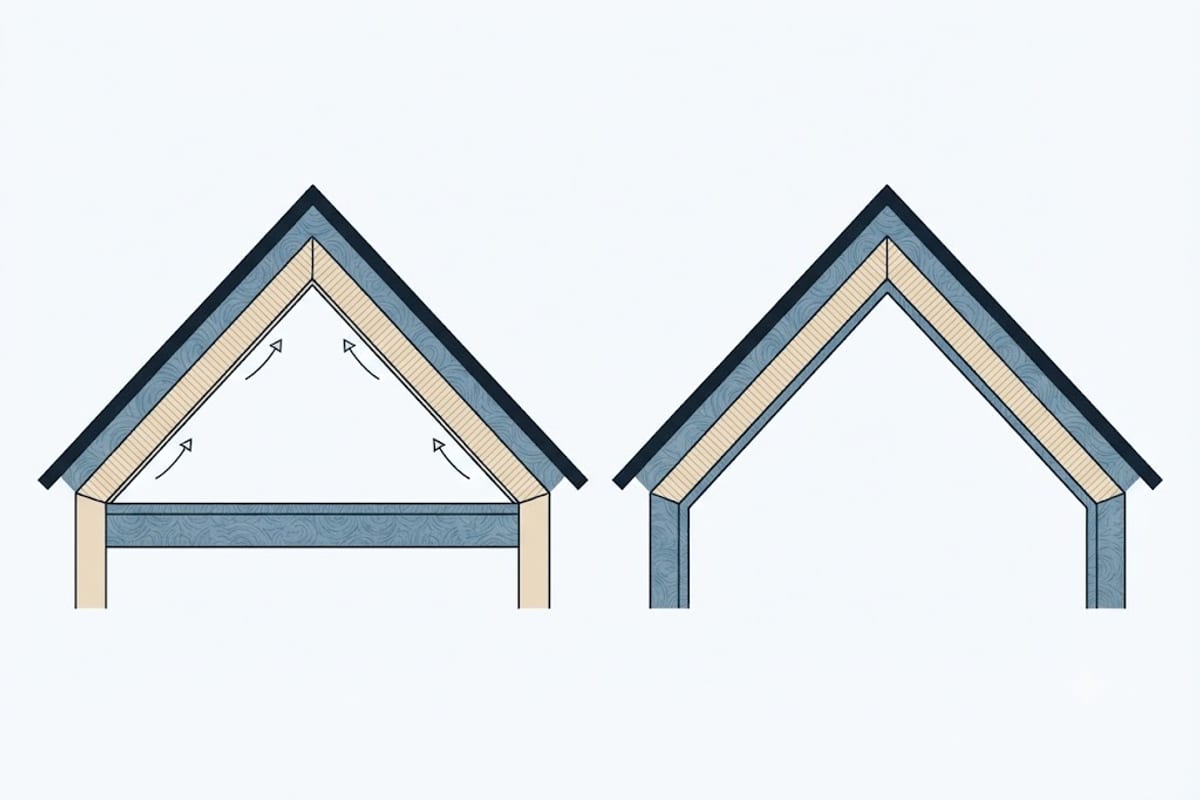
Unvented roof assemblies. Cathedral ceilings, conditioned attics, roofs with no room for vent channels. Here the insulation must be air-impermeable and in contact with the deck, because there is no ventilation to carry moisture away. Loose fill cannot do this job at all.
Crawlspaces being sealed and conditioned. Closed-cell on the walls handles insulation and vapour together.
Where it is not
A standard vented attic floor. This is where most foam is sold and where it makes the least sense. The ceiling plane is accessible, sealing is straightforward, and depth is free — nobody is short of headroom above a ceiling. Loose fill to R-49 over a sealed ceiling performs as well as foam to R-38 and costs a quarter as much.
Filling stud cavities in a wall you are already opening. Foam is better than batts here, but the gap is much smaller than the price gap, and dense-pack cellulose gets most of the way. See blown-in vs batt insulation.
Payback, honestly
Take the $6,500 difference on that attic. Even generous energy savings on a whole house run a few hundred dollars a year, and the marginal saving of foam over sealed loose fill is a fraction of that — the first R-30 does most of the work, and both options deliver it. The difference does not pay back in any ordinary timeframe. See insulation payback period for the diminishing-returns arithmetic.
That is not an argument against foam. It is an argument against buying foam for energy savings in a place where loose fill works. Buy it where it solves a problem loose fill cannot solve.
The short version
Foam is 3–5× loose fill at equal R. Use it on rim joists, unvented roof decks and sealed crawlspaces, where it is doing a job nothing else does. On an ordinary vented attic floor, air-seal and blow loose fill to a higher R for a quarter of the money.