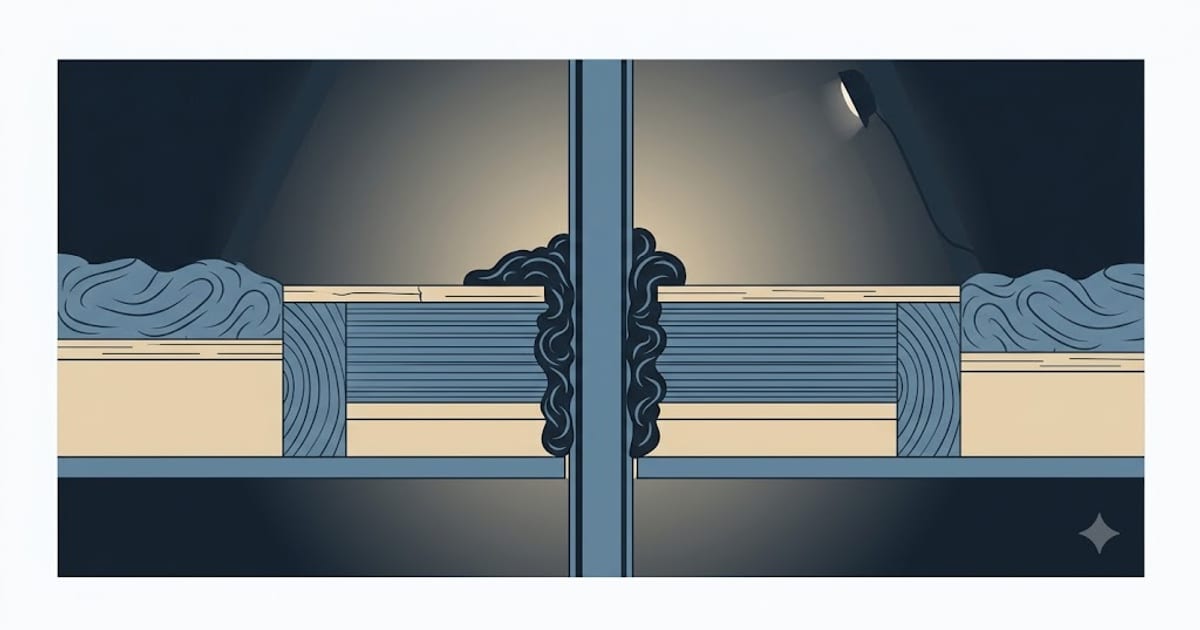
Insulation resists conduction — heat moving through material. It does essentially nothing about air moving through gaps, and warm indoor air leaving through the ceiling carries heat with it regardless of how deep the insulation above is.
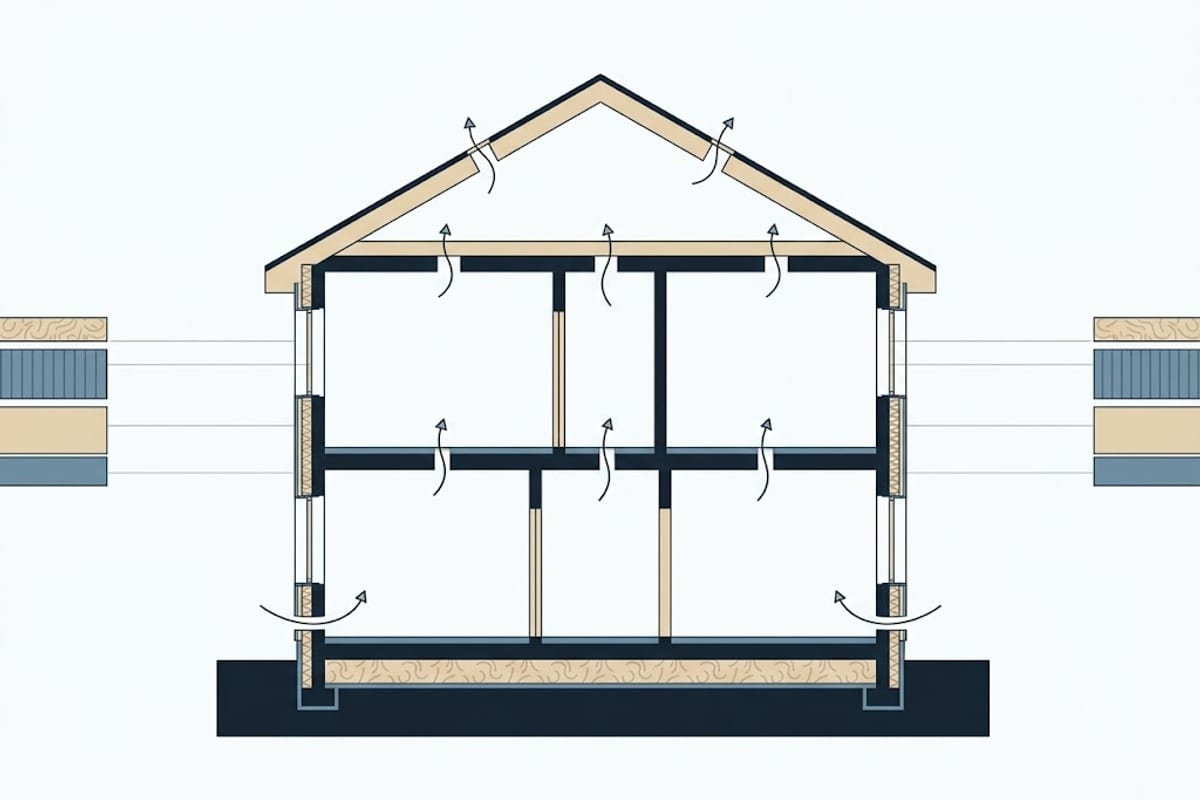
Warm air rises, so the house is slightly pressurised at the top. Every gap in the ceiling plane is an exit, and the air leaving is replaced by cold air drawn in lower down.
Do it before insulating, not after
Once loose fill is down, the penetrations are buried under a foot of material and nobody will ever find them again. In practice, "seal it later" means never.
This is the strongest argument for doing air sealing first even when it delays the insulation job by a weekend.
Where the leaks are, largest first
Dropped soffits and boxed ceilings. Chases above kitchen cabinets and bulkheads are often open straight into the attic, with a large opening nobody sees. Frequently the biggest single leak in a house.
Top plates. The gap between drywall and the top of interior walls, running the length of every wall. Individually small, collectively enormous.
Wire and pipe penetrations. Every cable and pipe passing into the attic.
The chimney chase. Requires clearance from combustible materials — use sheet metal and fire-rated caulk, never expanding foam against a flue.
Recessed lights. Old non-IC-rated fixtures cannot be covered with insulation and leak air continuously. Replacing them with IC-rated airtight fixtures is often the right answer rather than trying to box them.
The attic hatch. A large uninsulated hole, usually with no weatherstripping. Weatherstrip it and fix rigid insulation to the back.
Bathroom fan housings and their ducting.
Plumbing vent stacks.
What to seal with
- Gaps under about ¼ in — caulk.
- ¼ in to 3 in — expanding foam.
- Larger openings — rigid foam or sheet metal cut to fit, sealed at the edges with foam or caulk.
- Anything near a flue or chimney — sheet metal and fire-rated caulk only.
What not to seal
Soffit vents. These are the intake for attic ventilation and blocking them causes moisture problems. Fit baffles to hold insulation back from them.
Ridge and gable vents. Same reason.
The attic is meant to be ventilated to the outside and sealed from the house. People routinely get this backwards, insulating enthusiastically and blocking the soffits in the process — trading an insulation gain for condensation and rot.
Then insulate
With the ceiling plane sealed, insulation does the job it is actually good at. Depths and materials are in how many inches for R-49, and targets by climate zone in R-value by zone.
Air sealing frequently delivers a larger comfort improvement than the insulation that follows it, at a fraction of the cost.
How to find the leaks you cannot see
Most of the list above is found by looking. Two leaks are found by other means.
Dirty insulation is a map. Where air moves through insulation, it deposits dust — the fibres act as a filter. A grey or blackened patch in otherwise clean loose fill marks a leak underneath it, and it is often the only visible sign of a top plate gap or a buried penetration.
Cold spots on the ceiling below. On a cold morning, run a hand across the ceiling in the room under the attic. A noticeably cold patch usually means missing insulation or an air path above it.
For anything beyond that, a blower door test depressurises the house and makes every leak findable by hand or with smoke. It is the only method that finds leaks in the order of their actual size rather than their visibility, and it is worth paying for before a large retrofit.
FAQ
Should I air seal before adding insulation?
Yes, always. Once loose fill is down the penetrations are buried and inaccessible.
Where do attics leak air the most?
Dropped soffits above kitchen cabinets, top plates of interior walls, wire and pipe penetrations, the chimney chase and the attic hatch.
Can I use expanding foam around a chimney?
No. Use sheet metal and fire-rated caulk. Foam is combustible and needs clearance from flues.
Should I seal soffit vents?
No. They are the intake for attic ventilation. Use baffles to keep insulation clear of them.
Is air sealing more important than insulation?
They do different jobs, but air sealing usually gives a larger comfort improvement per dollar and must come first.