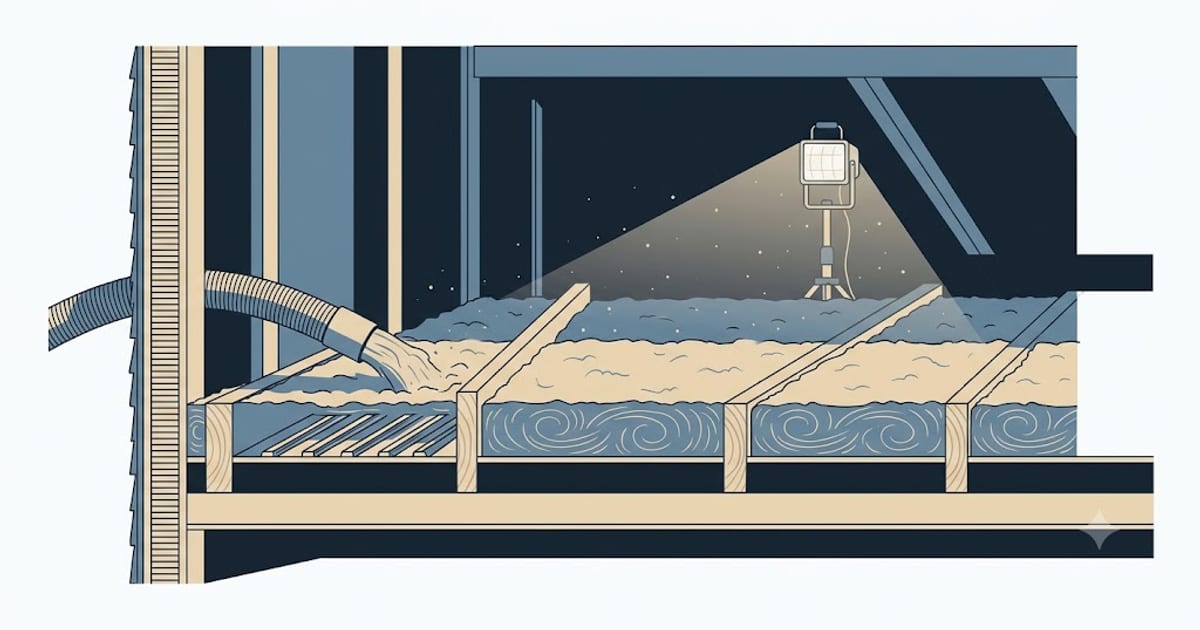
Two answers, and the difference between them is nearly six inches:
| Material | R per inch | Depth for R-49 |
|---|---|---|
| Blown cellulose | ~3.5 | 14 inches |
| Blown fiberglass | ~2.5 | 20 inches |
Both go through the same machine into the same attic. Fiberglass needs half again as much depth for the same result, which matters when the attic has knee walls, a low ridge, or storage you intended to keep.
Install deeper than the target
Loose fill compacts under its own weight. Cellulose settles roughly 15–20% of installed depth, so blowing exactly 14 inches leaves you at 11 or 12 within a year or two — around R-40, not R-49.
Every manufacturer publishes two numbers on the bag: an installed depth and a settled depth. Install to the deeper one. The settled figure is what you are buying; the installed figure is what you blow.
Loose-fill fiberglass settles considerably less, which partly repays its lower R per inch.
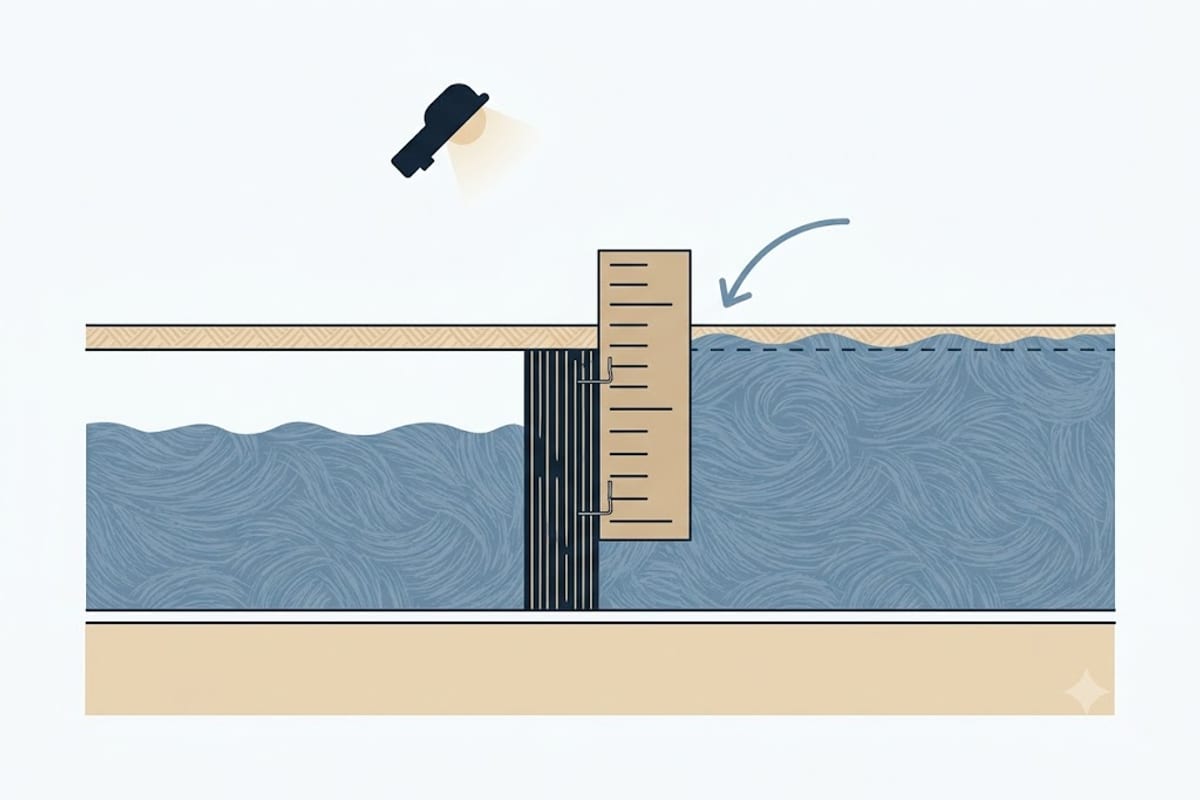
Staple cardboard depth markers to several joists before starting. Once the attic is half full, depth is impossible to judge by eye, and the far corners are always thinner than the middle.
How many bags
Bag coverage is printed on the bag as square feet per bag at a given depth, and it is the only reliable source — coverage varies between brands.
As a working figure for a 1,000 sq ft attic at R-49:
- Cellulose: roughly 55–75 bags
- Blown fiberglass: roughly 45–60 bags
Buy a few extra. Returning unopened bags is easy; a second trip mid-job with the machine rented by the hour is not.
Topping up existing insulation
Most R-49 jobs are top-ups rather than empty attics. R-values add, so the question is only what is already there.
Measure the existing depth in several places and estimate its type:
- Old fiberglass batts, compressed and dusty: assume around R-2.5 per inch, not the label.
- Existing loose fill: use the figures above, on measured depth rather than what was installed years ago.
Subtract from 49 and blow the difference. Blowing loose fill directly over old batts is normal and effective — it fills the gaps around the batt edges, which is where much of the loss was.
Two things to do before the machine starts:
- Air seal first. Top plates, wire penetrations, the attic hatch, around chimneys. Insulation slows conduction; it does nothing for air moving straight through. Blowing over unsealed penetrations buries them where nobody will find them for a decade.
- Keep it away from soffit vents. Baffles hold the insulation back so intake air can still reach the attic. Blocking soffits is a common way to trade an insulation gain for a moisture problem.
Where the joists disappear
At 14 to 20 inches, the insulation is well above the top of standard joists — a 2×10 is 9¼ inches. That has two consequences worth planning for.
Anything you store up there will crush the insulation and destroy its R-value locally. If storage matters, build a raised platform on framing above the finished insulation depth rather than resting boards on the joists.
And the attic becomes unwalkable. Joists are invisible under 16 inches of loose fill, and stepping between them puts a foot through the ceiling. Lay boards as you work, and finish by working backwards toward the hatch.
FAQ
How many inches of blown insulation is R-49?
About 14 inches of cellulose or 20 inches of blown fiberglass. Cellulose has a higher R-value per inch.
Should I install deeper than 14 inches for cellulose?
Yes. Cellulose settles 15–20%, so install to the manufacturer's installed depth — typically 16–17 inches to settle at 14.
How many bags do I need for a 1,000 sq ft attic?
Roughly 55–75 bags of cellulose or 45–60 of blown fiberglass at R-49. Use the coverage chart on the bag you are actually buying.
Can I blow insulation over existing batts?
Yes, and it helps — loose fill fills the gaps around batt edges. Measure existing depth first and blow only the difference.
Do I need to air seal before insulating?
Yes, and it must come first. Insulation does not stop air movement, and once loose fill is down, the penetrations are buried and inaccessible.