R-Value by Zone
IECC minimums by climate zone and assembly, converted into the inches of each material it actually takes.
The R-value your attic should have depends on where the house is, and the answer is set by the IECC climate zone map rather than by opinion.
Zone 2 wants R-30 to R-49. Zone 5 wants R-49. Zones 6 and 7 want R-49 to R-60. Those are the code minimums for new construction — an existing house is not required to meet them, but they are the right target because they were chosen where the economics stop making sense.
Local code beats the map
The IECC is a model code. Your jurisdiction may have adopted a stricter version, an older version, or amended it. Check locally before ordering, particularly if the work is permitted.
R-value on the bag is not R-value in the wall
A batt rated R-19 in a 2×6 wall gives a wall that performs closer to R-13, because roughly a quarter of a framed wall is wood and wood conducts about three times as readily as insulation. Attics are much better in this respect — the framing fraction is smaller and the insulation lies over it rather than between it — but the principle holds anywhere framing interrupts the layer.
Compressed insulation is not the R-value on the bag either
Stuffing an R-19 batt into a 2×4 cavity does not give R-19. Loose fill that has been walked on, or wetted and dried, performs below its label. If an existing attic looks flattened, treat its rating as optimistic.
Where the last R-value is worth having
At the top of the range the returns are thin — see the payback numbers. The exception is a house with a cooling load: attic insulation works in both directions, and in hot climates the summer benefit often justifies more than the heating figures alone would.
3 articles
floor, climate zone 4, mineral wool
| Climate zone | 4 |
|---|---|
| Assembly | floor |
| Code minimum | R-30 |
| mineral wool — R per inchholds shape, fire and sound resistant | 4.2R/in |
| Thickness needed | 7.1″ |
| One R-value betterabove code — usually cheap in an attic, expensive in a wall | R-40= 9.5″ |
Notes
- IECC 2021 is the reference here. Many states still enforce the 2009, 2015 or 2018 edition, and some cities go above it. Your building department decides, not this table.
- R-value assumes the insulation is installed without gaps, compression or wind-washing. A batt squeezed around wiring can lose a third of its rated value — installation quality matters more than the last R-5 on paper.
- Air sealing comes first. An attic at R-60 with unsealed penetrations underperforms an air-sealed R-38, because moving air carries far more heat than conduction through the assembly.
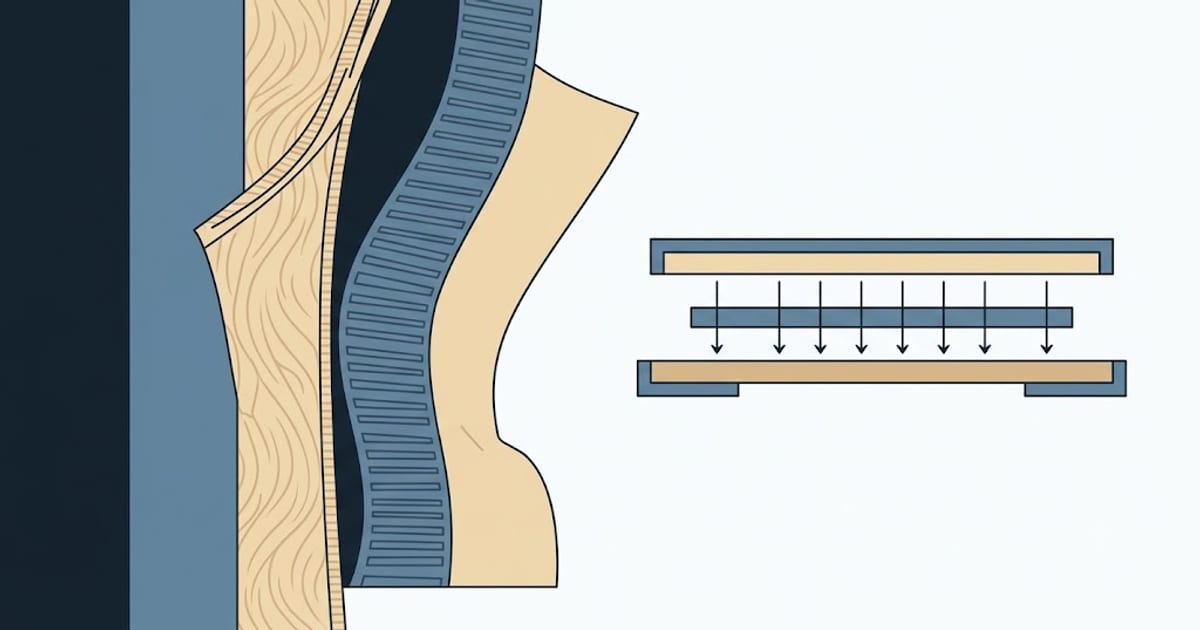 How R-Value Is Measured, and Why the Label Is a Laboratory Number
The figure on the bag is real and it was produced under conditions your attic will never reproduce. Three of the differences move it in opposite directions.
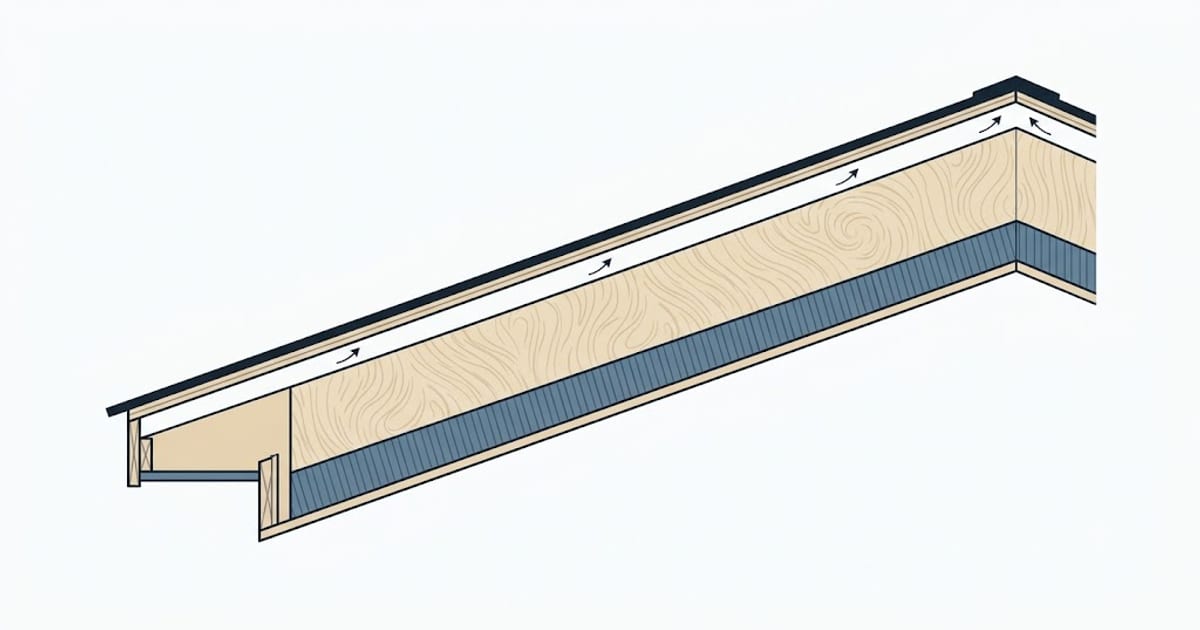 Cathedral Ceilings: The Same R-Target, Half the Depth to Put It In
The code target does not soften because the ceiling is sloped. Either the rafters get deeper, the material gets better, or the insulation goes on top.
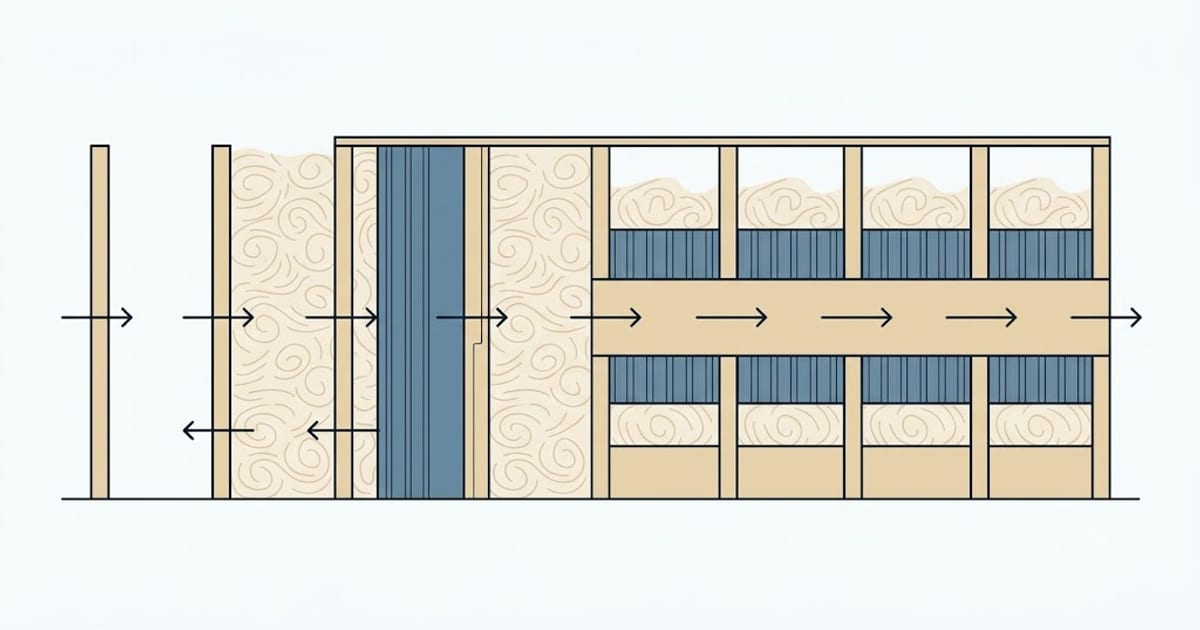 What "R-13+5ci" Means, and Why Codes Started Writing It That Way
Two numbers separated by a plus sign, because they do different jobs. One fills the cavity, the other covers the timber that the cavity cannot.