Insulation Savings & Payback
What adding insulation actually saves in dollars a year, and how long it takes to pay for itself — with climate, fuel and the diminishing return of each extra R all in the arithmetic.
Insulation savings do not follow the difference between two R-values. They follow the difference between two reciprocals, and that single fact changes most insulation decisions.
Heat loss through an assembly is proportional to 1/R. Going from R-0 to R-13 removes about three quarters of it. Going from R-38 to R-49 removes about six percent more. Same eleven points of R, wildly different value.
This is why "more R is always better" is bad advice, and why the answer to "should I add insulation" is almost always yes for an uninsulated attic and often no for one that already has R-38.
Three things decide the answer, and most advice names none of them
Climate. The same upgrade that saves $320 a year in Chicago saves about $76 in Houston. Advice written for one climate is simply wrong in another, and almost none of it says which climate it was written for.
Fuel. A heat pump delivers two and a half units of heat per unit of electricity. That makes the heat you are keeping in cheap, which is exactly why insulation pays back more slowly on a heat pump than on propane. Counter-intuitive, and it matters.
Where you are starting from. R-11 to R-38 is a completely different proposition from R-30 to R-38, even though both end in the same place.
What a good payback looks like
Under five years is genuinely good — very little you can buy for a house returns like that, and insulation has no moving parts and does not wear out. Five to twelve is reasonable if you are staying put. Beyond about fifteen, the heat you are losing is not worth enough to justify the work, and the money belongs in air sealing instead.
Air sealing first, and it is not close
Insulation slows heat moving by conduction. It does nothing about air moving bodily through gaps around can lights, top plates, ducts and the attic hatch. Blowing insulation over unsealed penetrations buries the problem somewhere you can no longer reach, and the return per dollar on sealing them is several times higher than the return on the last R-10.
2 articles
Insulation payback for 1800 ft² from R-11 to R-38 in Zone 4 heating with electric resistance
| Annual saving3,844 kWh of electric resistance | $577 |
|---|---|
| Heat saved1,800 ft² × 4,700 HDD × 24 × 0.065 | 13.1MMBTU/yr |
| Cost — DIY material$0.030 per ft² per R | $1,458 |
| Cost — installed$0.060 per ft² per R | $2,916 |
| Payback — DIY | 2.5years |
| Payback — installed | 5.1years |
| 20-year return on DIY costinsulation does not wear out | 7.9× |
| First R-10 is worthgoing from R-11 up | $386/yr |
| Last R-10 is worthgoing from R-28 to R-38 | $84/yr |
| ClimateBaltimore, St Louis, Seattle | Zone 4 — 4,700 HDD |
| Heating system100% efficient, $0.15/kWh assumed | Electric resistance |
Notes
- The first R-10 does most of the work. Going from R-11 up buys $386 a year; the last R-10 of this upgrade buys $84. Savings track the difference between two reciprocals, not the difference between two R-values, so every additional inch returns less than the one before it. "More R is always better" is how people talk themselves into a 30-year payback.
- A 2.5-year DIY payback is genuinely good — few things you can buy for a house return like that, and insulation has no moving parts and does not wear out. Over 20 years the DIY cost comes back 7.9 times over.
- Climate is half the answer. The same job in Zone 4 (4,700 HDD) saves $577; in Zone 6 at 7,900 HDD it would save $969, and in Zone 2 at 1,500 HDD only $184. Advice written for one climate is wrong in another.
- Electric resistance at 100% efficiency means 0% of what you buy goes up the flue before it reaches the room. Insulation saves the delivered heat, so the fuel saved is larger than the heat saved.
- Prices assumed: $0.15 per kWh. Scale the saving straight through for your own rate — the relationship is linear, and utility rates vary by more than a factor of two across the US.
- Existing R-value is taken as installed and dry. Insulation that has been compressed, wetted or walked on performs below its label, so real savings on an old attic often run higher than this.
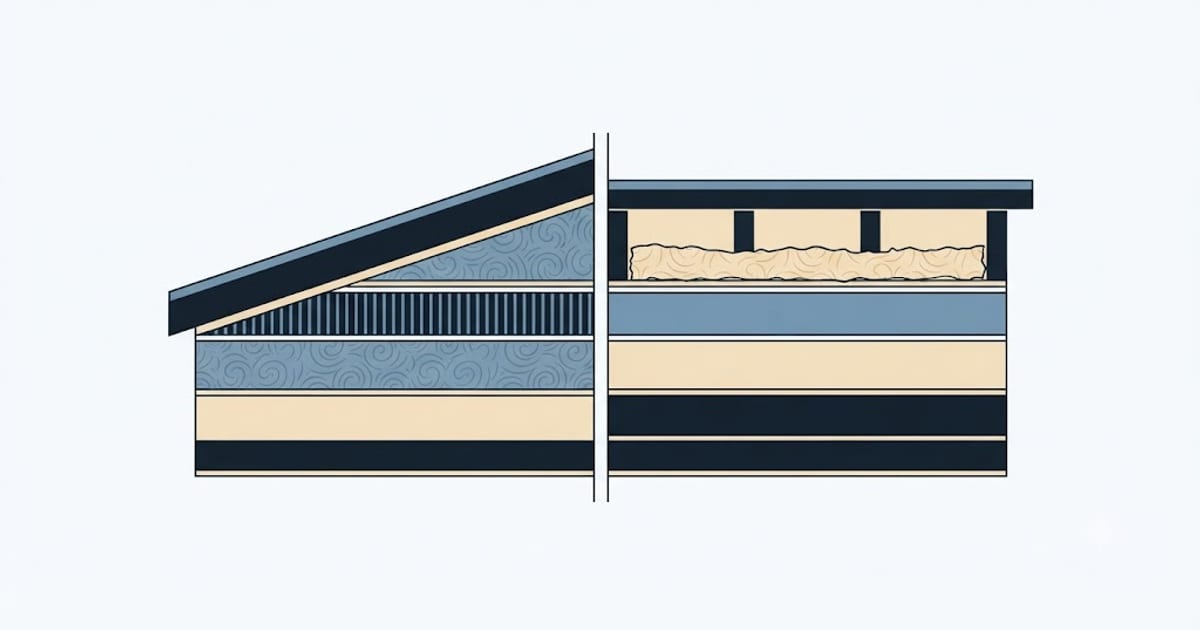 Spray Foam vs Blown-In Cost — Three to Five Times the Price for What
Foam costs three to five times loose fill at the same R-value. It earns that only where air sealing, moisture control or structural stiffness is the actual job.
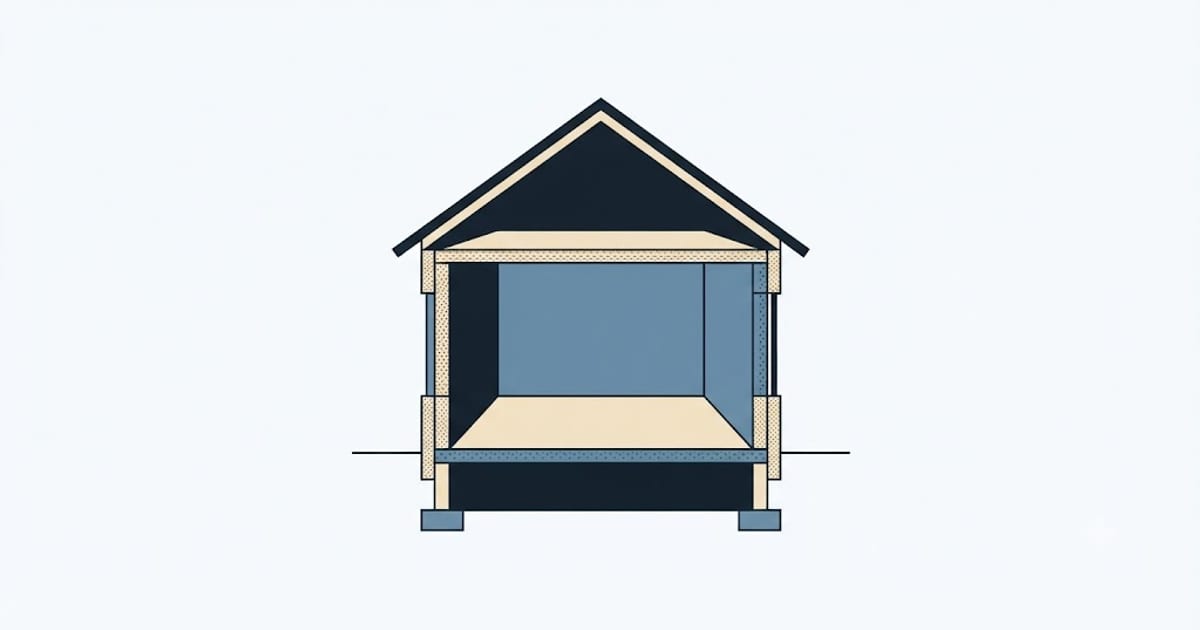 Cost to Insulate a House — Priced by Assembly, in the Order That Pays
Whole-house insulation quotes hide the fact that the four assemblies pay back at wildly different rates. Done in the right order, the first third of the budget does most of the work.