Materials
Insulation materials differ less in R-value per inch than the marketing suggests. They differ enormously in how well they fill an awkward space — and awkward spaces are where insulation actually lives.
| Material | R per inch |
|---|---|
| Blown fiberglass | 2.2–2.7 |
| Fiberglass batt | 3.1–3.4 |
| Blown cellulose | 3.2–3.8 |
| High-density fiberglass batt | 3.7–4.3 |
| Mineral wool batt | 3.7–4.3 |
| Open-cell spray foam | 3.5–3.8 |
| Polyiso board | 5.6–6.5 |
| Closed-cell spray foam | 6.0–7.0 |
Choose by cavity, not by product
Attics favor blown material. An attic floor is full of obstructions — irregular joist spacing, wiring, bracing, ducts, ceiling boxes — and every batt cut around one is a chance to leave a gap. Blown insulation flows around them, and adding depth is cheap.
Open stud bays favor batts. A stud bay is a rectangle, and batts fit rectangles far more cheaply than setting up a blowing rig.
Closed walls leave dense-pack cellulose as the only practical option, and it is a good one.
Tight cavities with a high target — rafters, retrofit walls — are where closed-cell foam earns its cost, because nothing else reaches R-35 in 5.5 inches.
Coverage charts are the specification
Every bag of blown insulation states the square feet it covers at a given R-value and the minimum bag count per 1,000 ft². Bag count makes the R-value, not depth on the day.
Material blown to the right depth at the wrong density measures fine with a ruler and underperforms for the life of the house. Count the empty bags.
Vapor permeance decides some assemblies outright
Closed-cell foam at 2 inches is a vapor retarder; open-cell is vapor-open. That difference is what makes closed-cell necessary against a roof deck in a cold climate and wrong against masonry that needs to dry inward.
What none of them fix
Air leaks. In most assemblies far more moisture and heat move through gaps than through the insulation, and no material choice compensates for an unsealed envelope.
4 articles
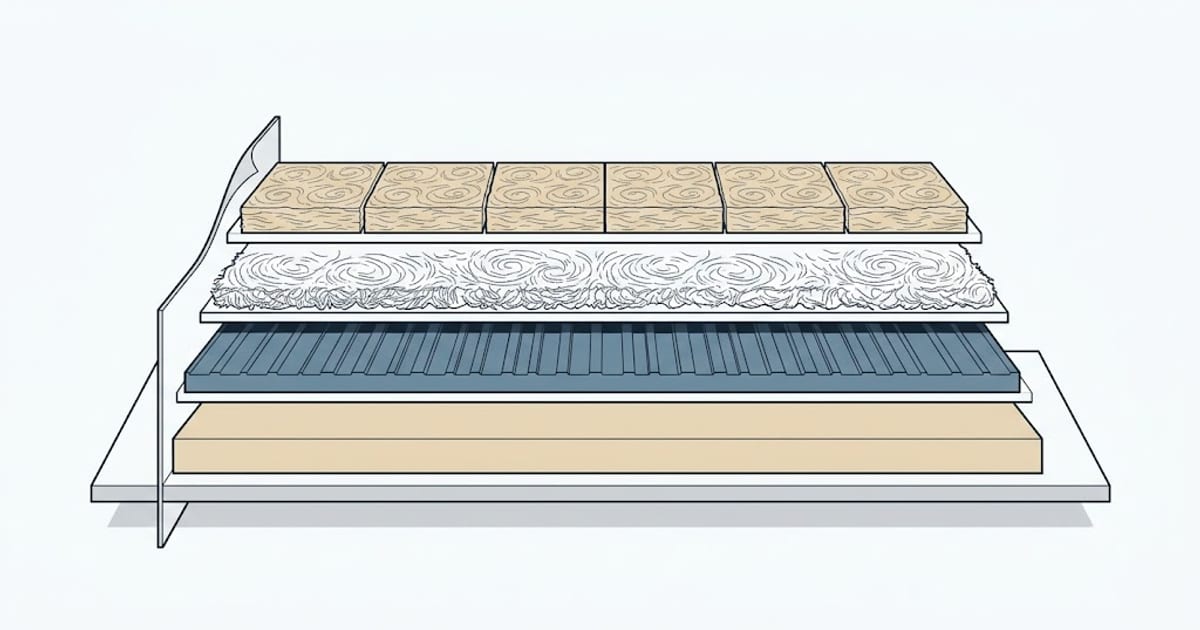 R-Value per Inch by Material — and the Three Reasons the Chart Lies a Little
Every insulation product publishes an R-value per inch, and multiplying by thickness works right up until it does not. Three effects move the real number, all in the same direction.
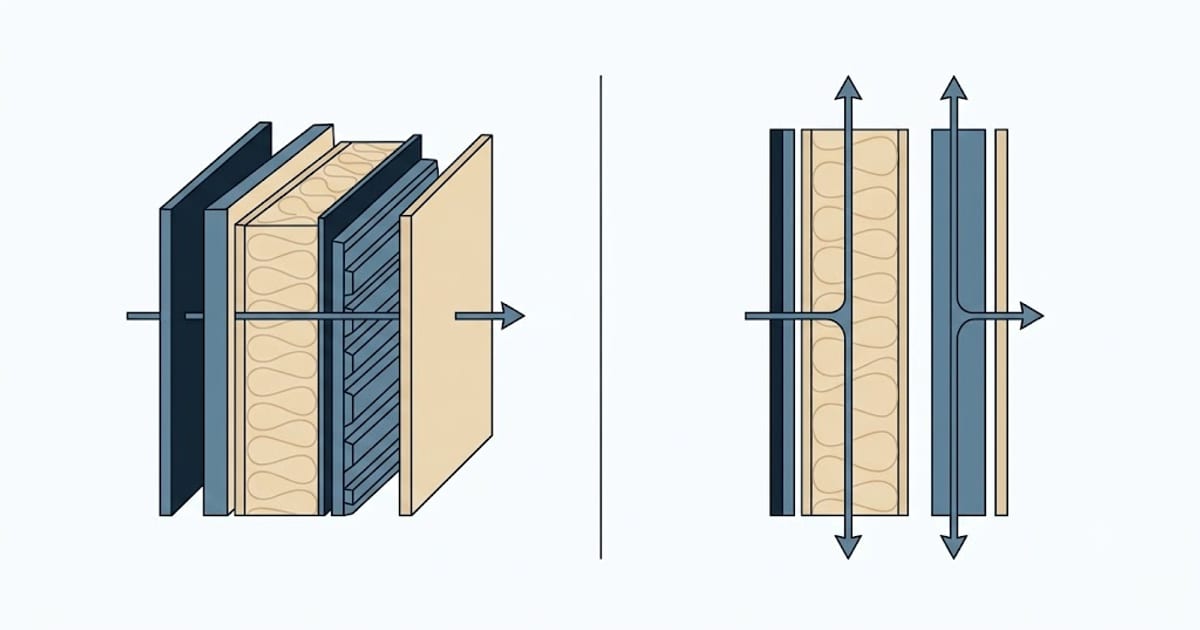 R-Value and U-Factor: One Is the Reciprocal of the Other, and That Changes Everything
Both describe the same physics. Only one of them can be added up, and using the wrong one is behind most bad insulation advice.
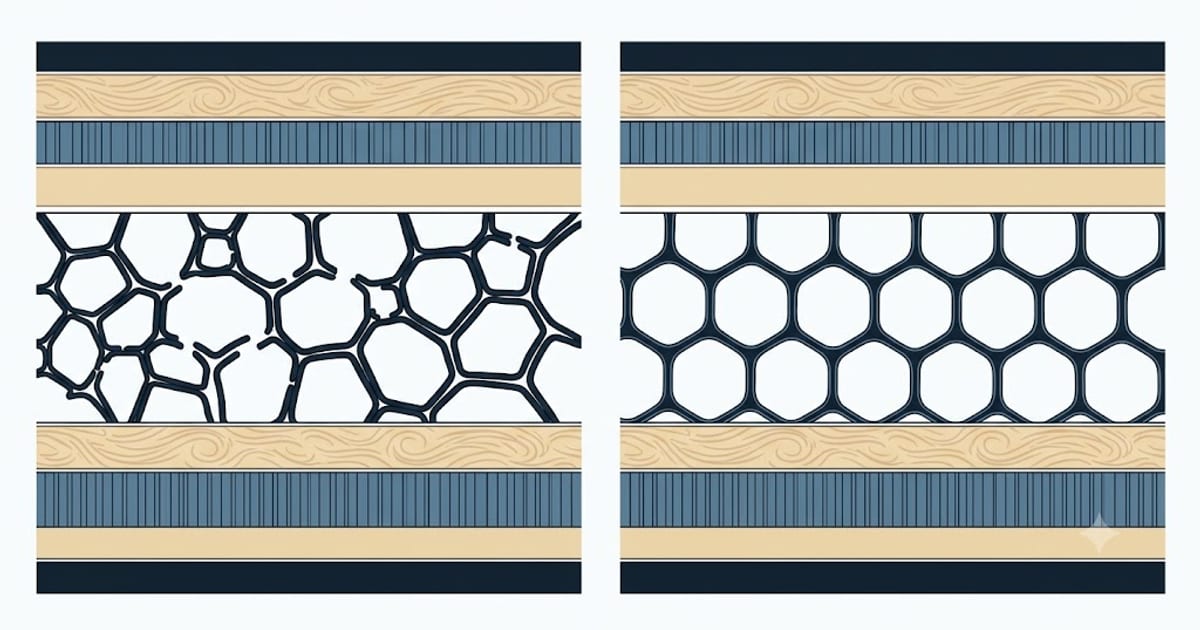 Open-Cell or Closed-Cell Spray Foam: Four Differences That Decide It
They are sold as two grades of the same product. They are not — one is a vapour barrier and one is not, and that difference decides whole assemblies.
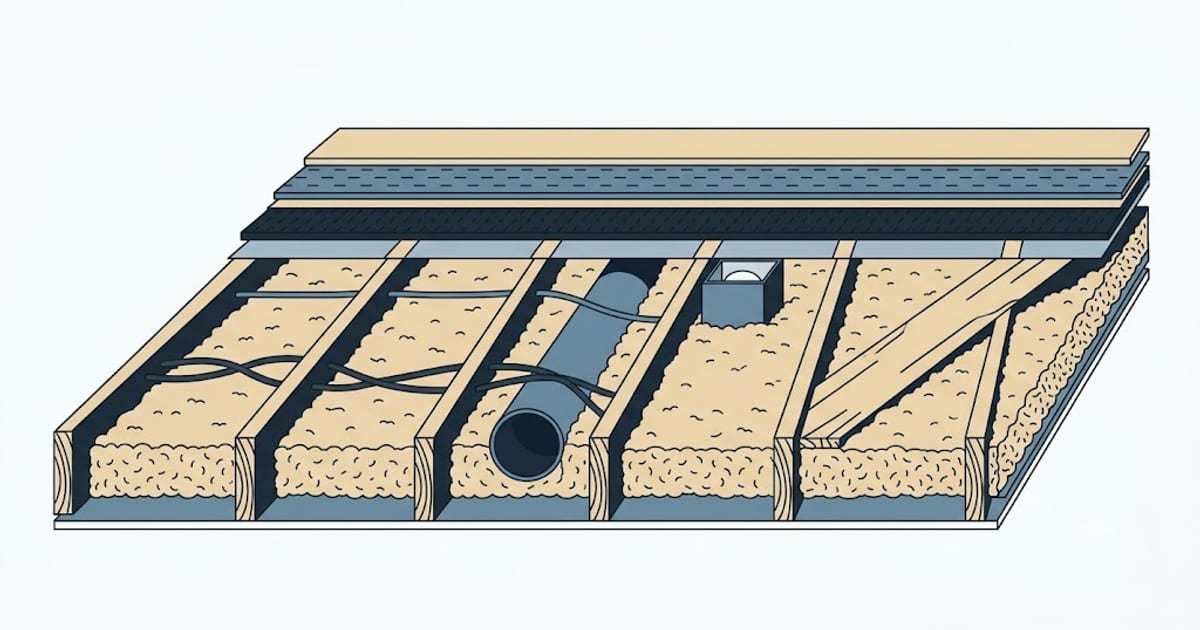 Blown-In or Batts? The Answer Depends on the Cavity, Not the Product
The two products perform almost identically when both are installed perfectly. They are not installed perfectly, and that is the whole comparison.