R-value measures resistance to heat flow, and it adds up through layers. Every material publishes a figure per inch, so the arithmetic looks simple: thickness × R-per-inch.
The chart
| Material | R per inch |
|---|---|
| Blown fiberglass (loose fill) | 2.2–2.7 |
| Fiberglass batt (standard) | 3.1–3.4 |
| Mineral wool batt | 3.0–4.3 |
| Blown cellulose | 3.2–3.8 |
| Open-cell spray foam | 3.5–3.7 |
| EPS rigid board | 3.6–4.2 |
| XPS rigid board | 4.7–5.0 |
| Closed-cell spray foam | 6.0–7.0 |
| Polyiso rigid board | 5.6–6.5 |
| Softwood framing | ~1.25 |
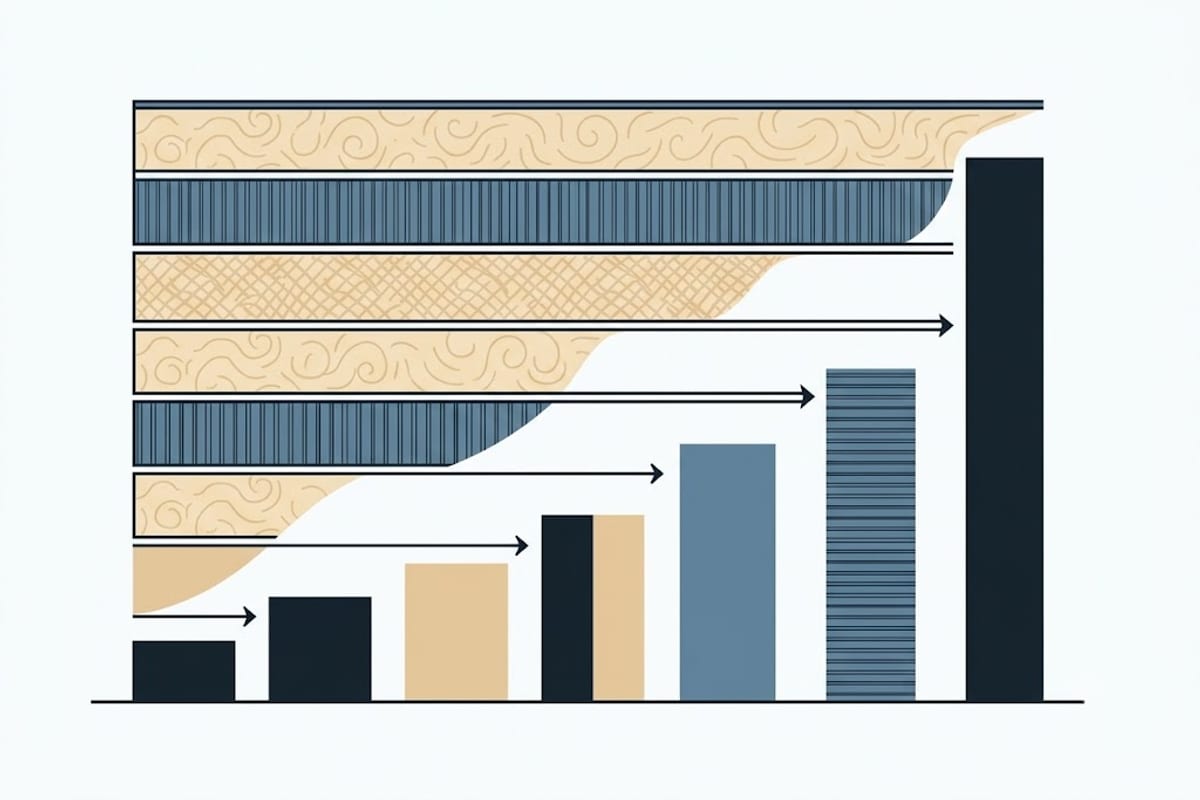
The spread from top to bottom is roughly threefold. Reaching R-30 takes about 12 inches of blown fiberglass or a little over 4 inches of closed-cell foam — which is why the choice is usually decided by how much depth you have, not by the material's merits.
The framing row is there deliberately. A wood stud is insulation too, just very poor insulation, and that fact is the whole subject of why the cavity number is not the wall number.
Reason one: polyiso loses R in the cold
Polyiso has the best published number of any common board, and it is the one number that does not hold when you need it.
Its R-value falls as temperature falls — a behaviour usually called thermal drift. A board rated R-6.5 per inch at mild temperatures can perform closer to R-5 or below on a genuinely cold night.
That is precisely backwards from what insulation is for. On the coldest night of the year, the material is at its worst.
The practical consequence: polyiso is excellent for roofs and warm-side applications, and a poor choice for cold-climate exterior walls where XPS or EPS hold their rating. Some manufacturers now publish cold-temperature values, and where they do, use those.
Reason two: loose fill settles
Blown insulation is installed to a depth and then compacts under its own weight. Cellulose typically settles somewhere around 15–20% of installed depth.
Blow 14 inches and come back in two years to 11 or 12. The R-value falls with the depth, and nothing about the attic looks different — this is a loss that happens silently.
The fix is in the installation: manufacturers publish a settled depth and an installed depth, and you install to the deeper figure. Bag coverage charts state both. Working from settled depth alone leaves the attic under-insulated as soon as it settles.
Loose-fill fiberglass settles far less than cellulose, which partly offsets its lower R per inch.
Reason three: compression
Fiberglass gets its R-value from trapped air. Squash it and you remove the air.
An R-19 batt is designed for a 6¼-inch cavity. Push it into a 5½-inch 2×6 stud bay — which happens constantly — and it delivers around R-18, not R-19. Stuff an R-30 batt into a 2×8 floor joist bay and the loss is larger.
Same in the other direction: an under-filled cavity leaves gaps, and a gap is a direct path for air rather than a slightly worse insulator. Voids around wiring and boxes cost more than their area suggests.
This is why high-density batts exist — R-15 in a 3½-inch 2×4 cavity, where a standard batt gives R-13, achieved by packing more fiber into the same depth rather than by compressing.
Using the chart properly
- Measure the depth you actually have. In a 2×6 wall that is 5½ inches, not 6.
- Divide the target R by the material's R per inch to see whether it fits.
- If it does not fit, you need a denser material or continuous exterior insulation — not a compressed batt.
- For loose fill, work from settled depth and install deeper.
Depth-to-R for attics specifically is in how many inches for R-49, and the targets themselves in R-value by climate zone.
FAQ
What insulation has the highest R-value per inch?
Closed-cell spray foam at 6–7 per inch. Polyiso board publishes similar figures but loses R-value in cold weather.
How thick does insulation need to be for R-30?
About 12 inches of blown fiberglass, 8–9 inches of cellulose, or a little over 4 inches of closed-cell spray foam.
Does compressing insulation reduce R-value?
Yes. Fiberglass insulates by trapping air, so compressing it removes air. An R-19 batt in a 5½-inch cavity delivers about R-18.
Does blown insulation settle?
Cellulose settles roughly 15–20% of installed depth. Install to the manufacturer's installed depth, not the settled depth, or the attic ends up short.
Why is polyiso a poor choice in cold climates?
Its R-value drops as temperature falls, so it performs worst exactly when insulation matters most. XPS and EPS hold their ratings in the cold.