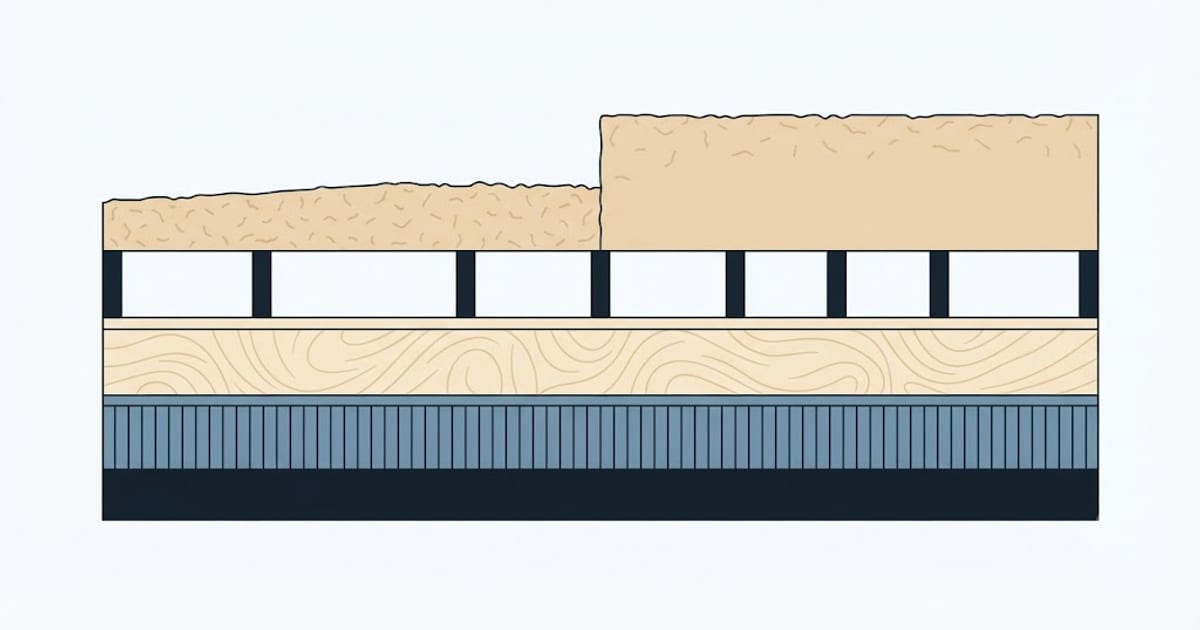
Blown-in attic insulation is quoted per square foot, and that unit hides the only variable that matters. Covering 1,200 sq ft to R-30 and covering the same 1,200 sq ft to R-60 are the same area and roughly double the material. A price per square foot with no R-value attached tells you nothing.
Ask for dollars per square foot at R-49 — or whatever your zone requires — and the quotes become comparable.
What it costs
Installed by a contractor, loose-fill over an existing attic floor, typical US pricing at the time of writing:
| Target R-value | Approx. settled depth | Installed per sq ft |
|---|---|---|
| R-30 | 9 – 11 in | $1.10 – 2.20 |
| R-38 | 12 – 14 in | $1.40 – 2.80 |
| R-49 | 15 – 18 in | $1.75 – 3.50 |
| R-60 | 19 – 22 in | $2.10 – 4.20 |
On a 1,200 sq ft attic taken to R-49 that is roughly $2,100 – 4,200. Depths vary by material — see insulation R-value per inch chart for the per-inch figures behind the column.
Doing it yourself, material only, runs about $0.55 – 1.10 per sq ft at R-49. Most big-box stores lend the blower free with a qualifying purchase, which is the whole of the DIY saving — the machine rental is the part that would otherwise make small jobs uneconomic.
Fiberglass or cellulose
Both are sold as loose fill and both are blown with the same machine.
| Loose-fill fiberglass | Cellulose | |
|---|---|---|
| R per inch (settled) | ~2.2 – 2.7 | ~3.2 – 3.8 |
| Depth for R-49 | ~19 – 22 in | ~14 – 16 in |
| Settling | Low | Higher — quoted settled |
| Moisture behaviour | Sheds water, does not hold it | Absorbs and releases; needs to stay dry |
| Fire treatment | Inherently non-combustible | Borate-treated |
| Material cost at R-49 | Slightly lower | Slightly higher |
Cellulose gets you there in less depth, which matters when the attic has limited height at the eaves. Fiberglass is the safer choice where there is any history of roof leaks. Neither is meaningfully better per dollar of R.
Why the per-square-foot number moves
Three things separate a $1.75 quote from a $3.50 one at the same R-value:
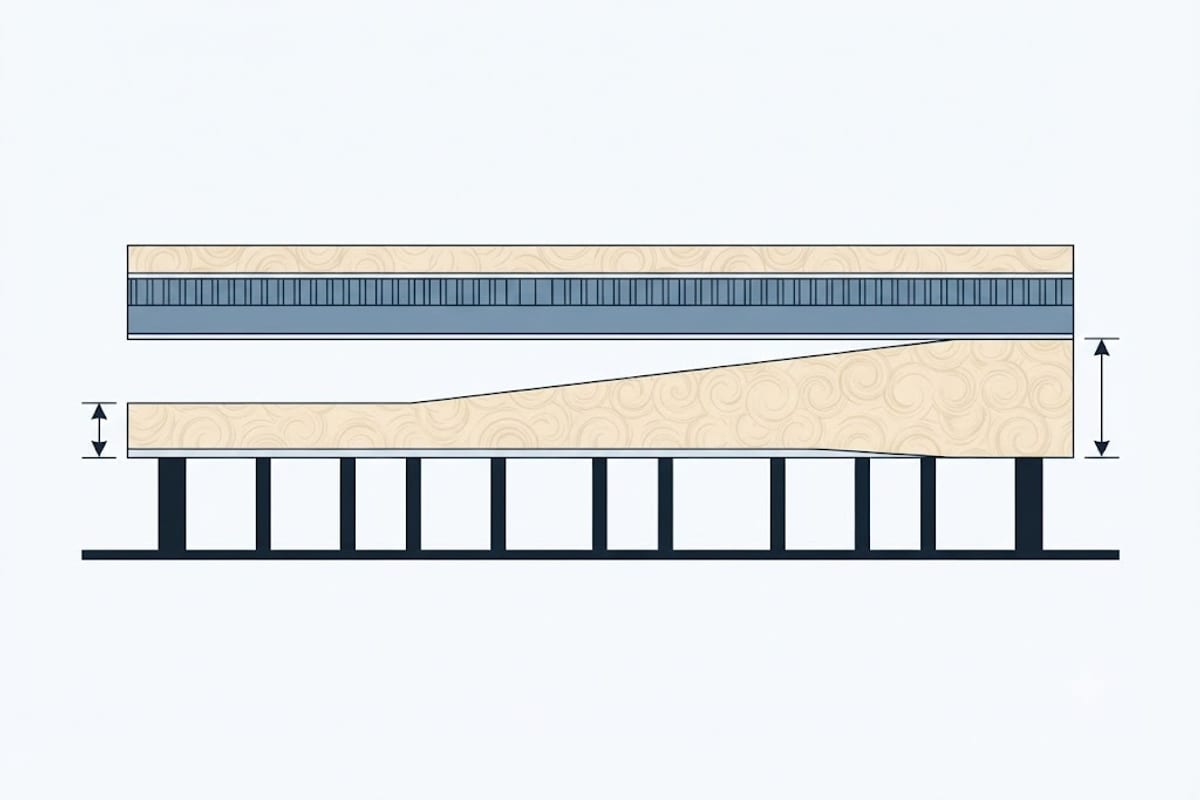
Access. A walk-up attic with a floored deck is a different job from a 22-inch hatch in a closet ceiling with a 4/12 roof. Crews price the hose run and the crawling.
Prep. Almost every attic needs work before fill goes in — baffles at the eaves so the soffit vents do not get buried, a dam around the hatch, boxes over recessed lights that are not IC-rated. That prep is often the difference between two quotes, and it is not optional.
Air sealing. Blowing insulation over an unsealed ceiling is the most common way to waste this money. Warm air moves through gaps by convection and loose fill does not stop air. Sealing first typically adds $300–900 and it is the highest-value part of the job — see the attic air sealing checklist.
If a quote has no line for baffles and no line for air sealing, it is not a cheaper version of the other quote. It is a different, smaller job.
Reading the bag, not the internet
Every bag of loose fill carries a printed coverage chart: for each target R-value it gives maximum coverage in square feet per bag, minimum settled thickness, and minimum weight per square foot. That chart is product-specific and it is the number that governs — it is what an inspector checks against.
The way it goes wrong is coverage without weight. Fluffing the material to hit the depth with fewer bags produces the right measurement and the wrong R-value, and it is invisible once the job is done. The defence is simple: count the empty bags, and check the count against the chart for your square footage.
Ask the contractor to leave the bags on site until you have counted them. A crew doing the job properly has no reason to object.
How much you actually need
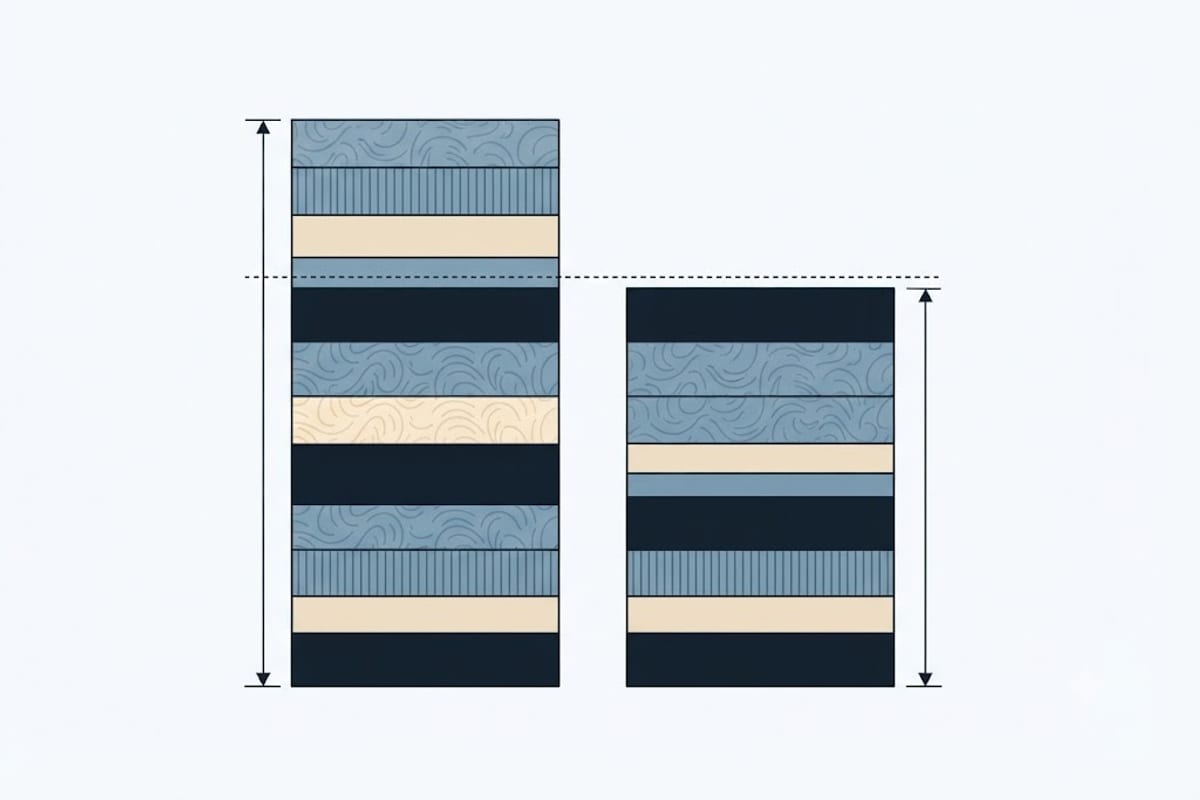
Existing insulation counts. If the attic already holds 6 inches of settled fiberglass, that is roughly R-14 and you are topping up, not starting over. Measure the depth in several places — it is rarely even — and take the lowest.
Your target comes from climate zone, not from a rule of thumb; see recommended R-value by climate zone and, for the most common upgrade decision, R-38 vs R-49 attic insulation.
The short version
Budget $1.75 – 3.50 per sq ft installed at R-49, insist every quote names an R-value alongside its price, and count the bags against the printed chart when the crew is done. Air-seal before anything is blown, or you are paying to insulate a ceiling that leaks air.