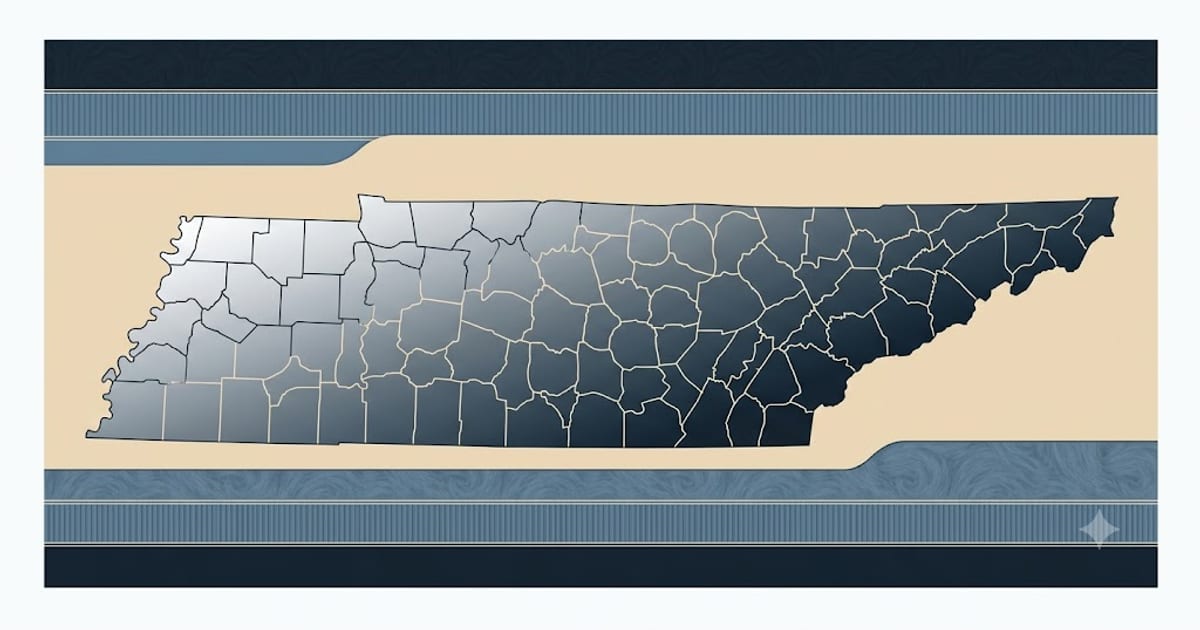
Every insulation recommendation starts with "find your climate zone", and most people find it by typing a zip code into a lookup. That usually works. When it does not, the failure is quiet — you get a plausible zone number that is one off, and you buy the wrong depth.
The zone table itself is here.
Zones are assigned by county
The IECC assigns climate zones by county, in a table inside the code. Every county in the country has exactly one zone designation, and that table is the authority.
Zip codes are a postal routing construct. They do not nest inside counties — a single zip code can span two counties, and in some places three. So a zip-to-zone lookup is doing an approximation: it maps your zip to whichever county it thinks is dominant, then reports that county's zone.
Where a zip crosses a county line, and those counties are in different zones, the lookup is a coin flip. That is uncommon but not rare, and it happens most often exactly where it matters — near the zone boundaries.
The reliable method is two steps: find your county, then look that county up in the code's zone table. Your building department can confirm it in seconds and has no reason to be wrong.
The moisture letter
Zones carry a letter as well as a number: A moist, B dry, C marine. Zone 4A and 4C have the same R-value requirements and quite different assembly rules, because vapour behaves differently.
The letter does not change the insulation depth. It changes:
- Where the vapour retarder goes, or whether you want one at all.
- Which wall assemblies are safe — an assembly that dries to the outside is fine in one designation and a mould problem in another.
- Whether a ventilated or unvented roof assembly is appropriate.
If you are only adding attic insulation, the number is what you need. If you are building or renovating a wall assembly, the letter matters more than the number.
Elevation is why maps mislead
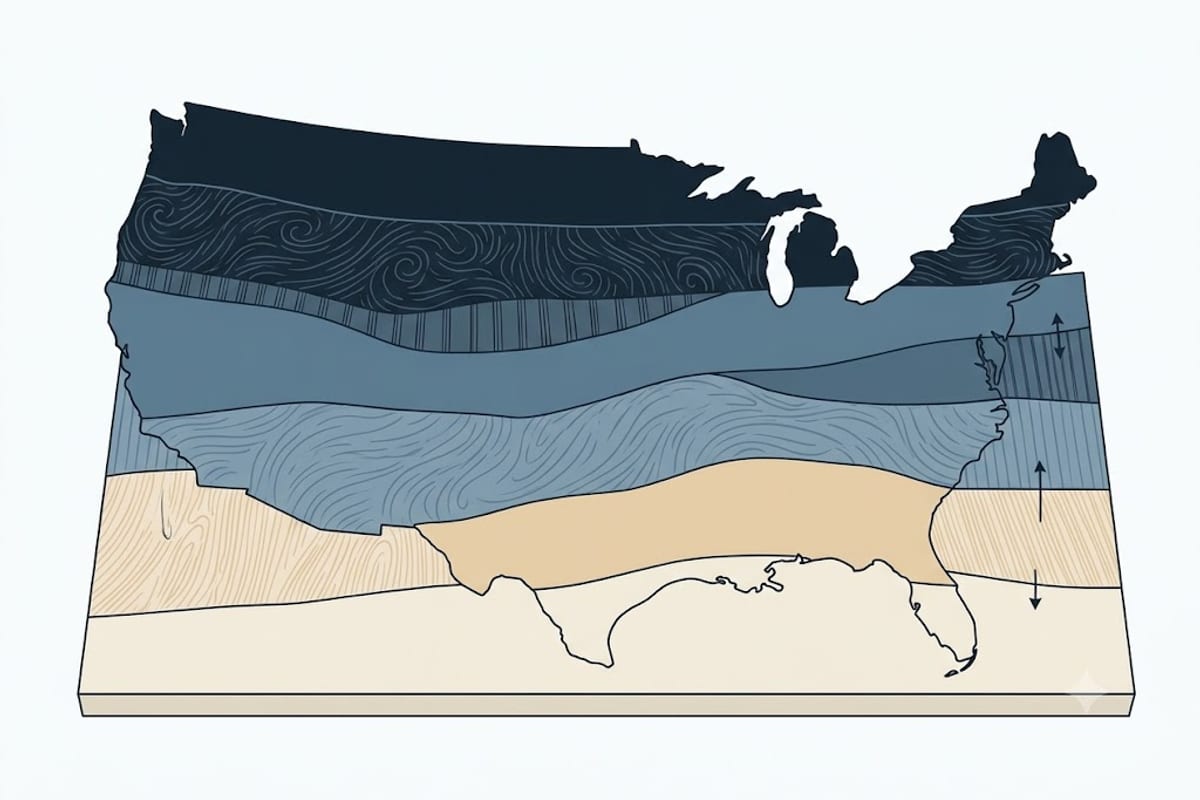
Climate zones follow latitude only loosely. Elevation pushes a location toward colder zones, and it does so sharply.
The practical result is that neighbouring counties can be in different zones, and a county in the mountains can be two zones colder than one at sea level at the same latitude. Any zone map rendered as smooth horizontal bands is a simplification that will be wrong in mountainous country — which is most of the western states and a good deal of the Appalachians.
This is why "look at the picture" is the least reliable method and county lookup is the most reliable one.
When the zone changes
Zone assignments are not permanent. They have been revised between code editions, and a small number of counties have moved. If you are working from a zone you looked up years ago, or from a contractor's memory, confirm it against the edition your jurisdiction currently enforces.
Two versions of the same question, which need separate answers:
- What zone is this county in, under the edition my jurisdiction enforces?
- What does that edition require for the component I am insulating?
Getting the first right and the second from a different edition is a common and invisible error — it is how people end up installing R-49 in a jurisdiction that has moved to R-60.
What to do with the answer
Once you have the zone number:
- Ceiling, wall, floor and basement minimums are in the zone table.
- Depth per material is on the attic page — the zone gives you an R-value, and R-value is not a thing you can buy.
- Treat the code figure as a floor. In an accessible attic, exceeding it is cheap.
What this page does not cover
- The county-to-zone table itself lives in the code. Reproducing a partial version here would be worse than useless, because a stale copy is indistinguishable from a current one.
- State amendments are common and always win.
- Zones outside the United States use entirely different systems.
- Design temperatures and degree days are separate figures used for equipment sizing, not for insulation minimums.
Find the county. Look up the county. Confirm the edition. Three steps, and none of them is a map.