Here is the finding first, because it is more useful than the table: the state you live in barely changes what attic insulation costs.
Across all 51 states the spread is 1.35× — Washington at $2,268 against West Virginia at $1,683 on a 1,000 ft² attic. That is the narrowest of any trade priced across these sites, and there is a clean reason for it.
Why insulation resists geography
Labor is only 45% of a blow. The machine does the work, the bags cost what bags cost, and a two-person crew can do a typical attic in a morning. There is simply less time in this job for a local wage to act on.
Compare the same exercise on other trades: painting is 78% labor and spreads 1.51×, drywall is 65% and spreads 1.78×. The percentage of a job that is hours predicts how much geography matters, and insulation sits at the bottom of that list.
The practical consequence: if a quote is well above the range below, local wages are not the explanation. Something else is going on — a different R-target, removal of the old material, or air sealing bundled in without being named.
How the numbers were built
The national price. Blown fiberglass or cellulose to roughly R-49, with baffles at the eaves, runs about $1.90 per ft² of attic floor in 2026, inside a market range of roughly $1.00 to $2.80.
The labor share. 45%, scaled by the BLS mean annual wage for insulation workers, floor, ceiling and wall in each state against the U.S. mean of $54,740 — OEWS, May 2025, SOC 47-2131. Three jurisdictions have no published figure; those rows fall back to the national number and say so rather than inventing one.
All 51 states, a 1,000 sq ft attic
The figures below are for a 1,000 ft² attic. For a different area, put your own numbers into the blown-in insulation calculator — the labor factor for your state is the one in this table.
| State | Insulation Workers mean pay | Labor factor | Typical total | Bid range |
|---|---|---|---|---|
| Alabama | $49,400 | 0.902 | $1,817 | $956 – $2,677 |
| Alaska | $54,210 | 0.99 | $1,892 | $996 – $2,788 |
| Arizona | $45,420 | 0.83 | $1,754 | $923 – $2,585 |
| Arkansas | $44,370 | 0.811 | $1,738 | $915 – $2,561 |
| California | $61,840 | 1.13 | $2,011 | $1,058 – $2,963 |
| Colorado | $54,960 | 1.004 | $1,903 | $1,002 – $2,805 |
| Connecticut | $50,450 | 0.922 | $1,833 | $965 – $2,701 |
| Delaware | $54,460 | 0.995 | $1,896 | $998 – $2,794 |
| District of Columbia | — (not published) | 1 | $1,900 | $1,000 – $2,800 |
| Florida | $49,730 | 0.908 | $1,822 | $959 – $2,685 |
| Georgia | $55,570 | 1.015 | $1,913 | $1,007 – $2,819 |
| Hawaii | — (not published) | 1 | $1,900 | $1,000 – $2,800 |
| Idaho | $44,390 | 0.811 | $1,738 | $915 – $2,562 |
| Illinois | $60,200 | 1.1 | $1,985 | $1,045 – $2,926 |
| Indiana | $55,350 | 1.011 | $1,910 | $1,005 – $2,814 |
| Iowa | $57,770 | 1.055 | $1,947 | $1,025 – $2,870 |
| Kansas | $56,230 | 1.027 | $1,923 | $1,012 – $2,834 |
| Kentucky | $60,630 | 1.108 | $1,992 | $1,048 – $2,936 |
| Louisiana | $49,970 | 0.913 | $1,825 | $961 – $2,690 |
| Maine | $50,390 | 0.921 | $1,832 | $964 – $2,700 |
| Maryland | $60,350 | 1.102 | $1,988 | $1,046 – $2,929 |
| Massachusetts | $52,420 | 0.958 | $1,864 | $981 – $2,747 |
| Michigan | $51,190 | 0.935 | $1,845 | $971 – $2,718 |
| Minnesota | $61,550 | 1.124 | $2,006 | $1,056 – $2,957 |
| Mississippi | $56,200 | 1.027 | $1,923 | $1,012 – $2,834 |
| Missouri | $60,890 | 1.112 | $1,996 | $1,051 – $2,942 |
| Montana | $52,820 | 0.965 | $1,870 | $984 – $2,756 |
| Nebraska | $65,030 | 1.188 | $2,061 | $1,085 – $3,037 |
| Nevada | $48,460 | 0.885 | $1,802 | $948 – $2,655 |
| New Hampshire | $52,220 | 0.954 | $1,861 | $979 – $2,742 |
| New Jersey | $60,330 | 1.102 | $1,987 | $1,046 – $2,929 |
| New Mexico | $53,100 | 0.97 | $1,874 | $987 – $2,762 |
| New York | $66,360 | 1.212 | $2,081 | $1,096 – $3,067 |
| North Carolina | $44,180 | 0.807 | $1,735 | $913 – $2,557 |
| North Dakota | $49,700 | 0.908 | $1,821 | $959 – $2,684 |
| Ohio | $58,850 | 1.075 | $1,964 | $1,034 – $2,895 |
| Oklahoma | $49,380 | 0.902 | $1,816 | $956 – $2,677 |
| Oregon | $61,290 | 1.12 | $2,002 | $1,054 – $2,951 |
| Pennsylvania | $54,660 | 0.999 | $1,899 | $999 – $2,798 |
| Rhode Island | — (not published) | 1 | $1,900 | $1,000 – $2,800 |
| South Carolina | $49,900 | 0.912 | $1,824 | $960 – $2,689 |
| South Dakota | $48,090 | 0.879 | $1,796 | $945 – $2,647 |
| Tennessee | $50,810 | 0.928 | $1,839 | $968 – $2,710 |
| Texas | $49,850 | 0.911 | $1,824 | $960 – $2,687 |
| Utah | $43,680 | 0.798 | $1,727 | $909 – $2,545 |
| Vermont | $58,150 | 1.062 | $1,953 | $1,028 – $2,878 |
| Virginia | $47,660 | 0.871 | $1,789 | $942 – $2,637 |
| Washington | $78,280 | 1.43 | $2,268 | $1,194 – $3,342 |
| West Virginia | $40,820 | 0.746 | $1,683 | $886 – $2,480 |
| Wisconsin | $52,450 | 0.958 | $1,864 | $981 – $2,747 |
| Wyoming | $47,620 | 0.87 | $1,789 | $941 – $2,636 |
What the table cannot see, and here it matters more than elsewhere
For most trades the missing variables are about the building. For insulation, the biggest one is about the climate, and it is not in the price above at all.
R-49 is not the target everywhere. The table prices a blow to roughly R-49, which is the recommended attic level for most of the northern half of the country. In climate zones 1–2 — southern Florida, the Gulf Coast, southern Texas, Hawaii — the recommendation is R-30 to R-38, which is meaningfully less material for the same square footage. See recommended R-value by climate zone and check your zone before using a number from this table.
So a Florida quote that is under the range may be perfectly correct, and a Minnesota quote at the same figure may be short on depth. The state name is not enough — the zone is.
The line that is not in the price and should be
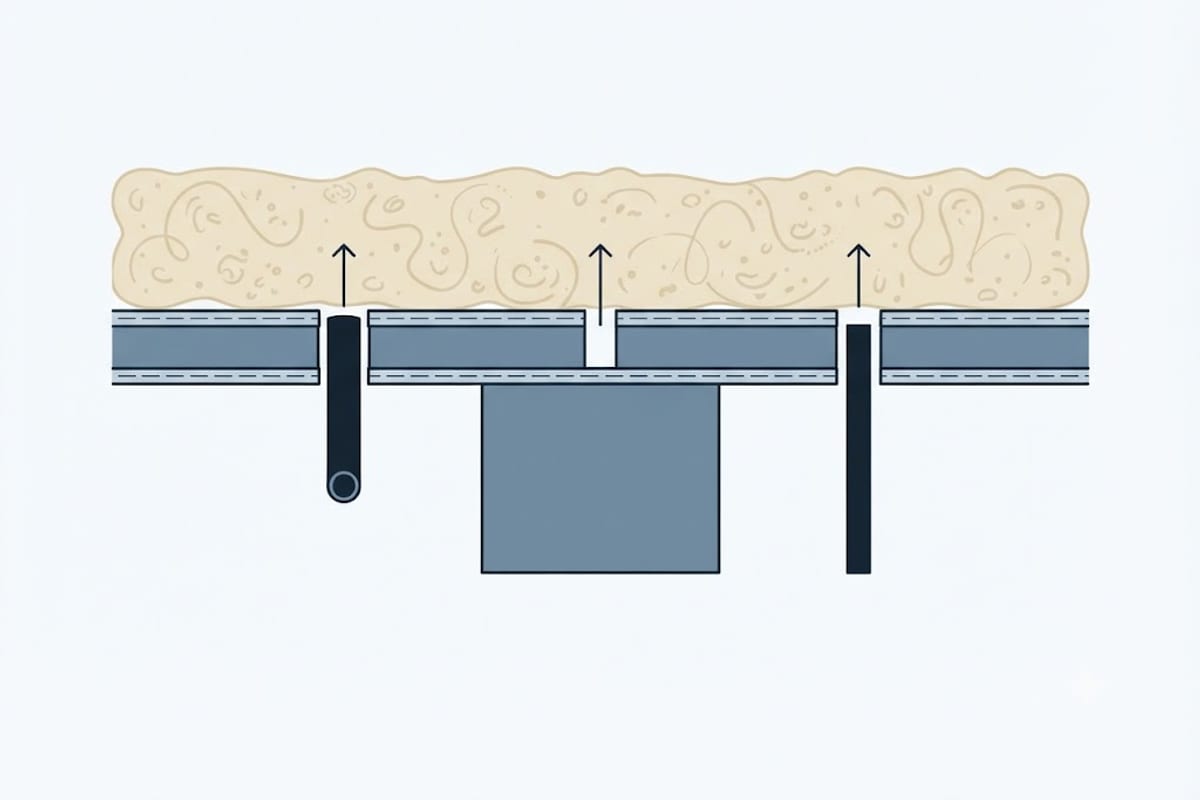
Air sealing. Blowing insulation over unsealed top plates, wire penetrations, recessed can lights and a leaky attic hatch buries the problem instead of fixing it. Warm air keeps moving through the assembly, carrying moisture into the loose fill, and the R-value on the invoice is not the R-value you get.
Sealing first typically costs a few hundred dollars and changes what the insulation is able to do. It is the single most common way this money gets wasted, and it is almost never on a quote unless you ask. See attic air sealing checklist.
Also not included: removal of existing insulation, which is its own job — see attic insulation removal cost — and knob-and-tube remediation in older houses, which has to be done before anything gets blown over it.
Verify depth, not bag count alone
R-49 in loose fill is a depth, and every bag prints how many square feet it covers at each depth. That is the number to hold a crew to.
Ask for the target depth and the bag count in writing before the job, then check the depth rulers after the crew leaves — they are required to be installed and they are the only physical evidence of what you bought. Under-blowing is invisible from the hatch and it is the most common shortfall in this trade. See how many inches of blown insulation for R-49.
How to use this
Confirm your climate zone, open your state page above, set your real attic area. Then treat any quote well outside the range as a scope question rather than a price question — in this trade, that is nearly always what it is. For the payback side of the decision, see insulation payback period.